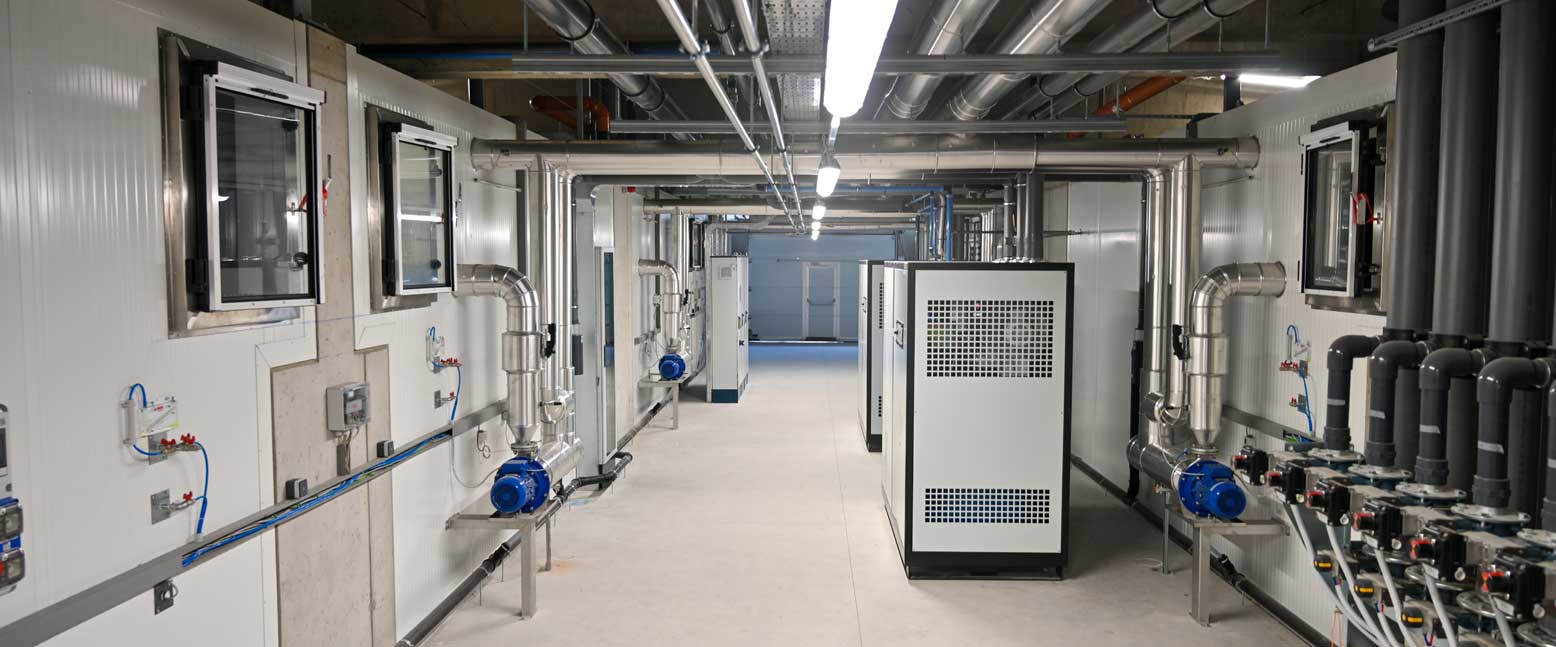
Controlled atmosphere is a specific preservation method, developed commercially in Europe and the United States of America in the first half of the 1950s, to reduce the level of oxygen in the cold rooms where the products are stored and therefore slow down their maturation, prolonging their marketability. The composition of the atmosphere is kept constant through the use of automatic control systems: the air inside the cold rooms is modified with formulations that vary based on the type of product to be preserved, and these mixtures of O2, Co2 C2H4 are checked and kept constant with special systems.
INDUSTRIAL SECTOR
The same principle of reducing the oxygen level in closed environments has recently also become established in the industrial sector in order to prevent the risk of fires.
FOOD INDUSTRY
This preservation system is mainly applied in the fruit and vegetable sector: after harvesting, fruit and vegetable products "breathe", consume oxygen and produce heat, water vapour, carbon dioxide and aromatic components; all these factors lead to the maturation and then deterioration of the product, therefore for good and long-lasting conservation it is not enough just to control the temperature, but it is also necessary to manage the values of oxygen, carbon dioxide and ethylene.
The controlled atmosphere and temperature system is now universally used to preserve a large variety of products for months, in the case of apples and pears up to 10-12 months, allowing the markets to be supplied with these products throughout the year.